
3 Design strategy frameworks that differentiate successful products
There are many frameworks that aid in helping designers define their strategic approach when working with clients and companies, or when launching their startup ideas. Whether it’s aproduct, a brand, or a service, you need true and tested frameworks to help you think through and achieve the results you set you to achieve in the beginning of your project. I will explore 3 frameworks that you can use to guide your conversations.
Often, when starting a project, there is an impulse from the client or the entrepreneur to jump right into a solution that they are envisioning in their minds. While that hunch may be the right intuition to follow, the wisest thing is rather to validate assumptions and take a risk-averse path through strategic planning and design.
These frameworks are true and tested, have guided multiple successful innovations, and should be considered by stratgists, designers, and companies who are looking to step up and adopt a strategic mindset that thrives on thoughtful guidelines for success.
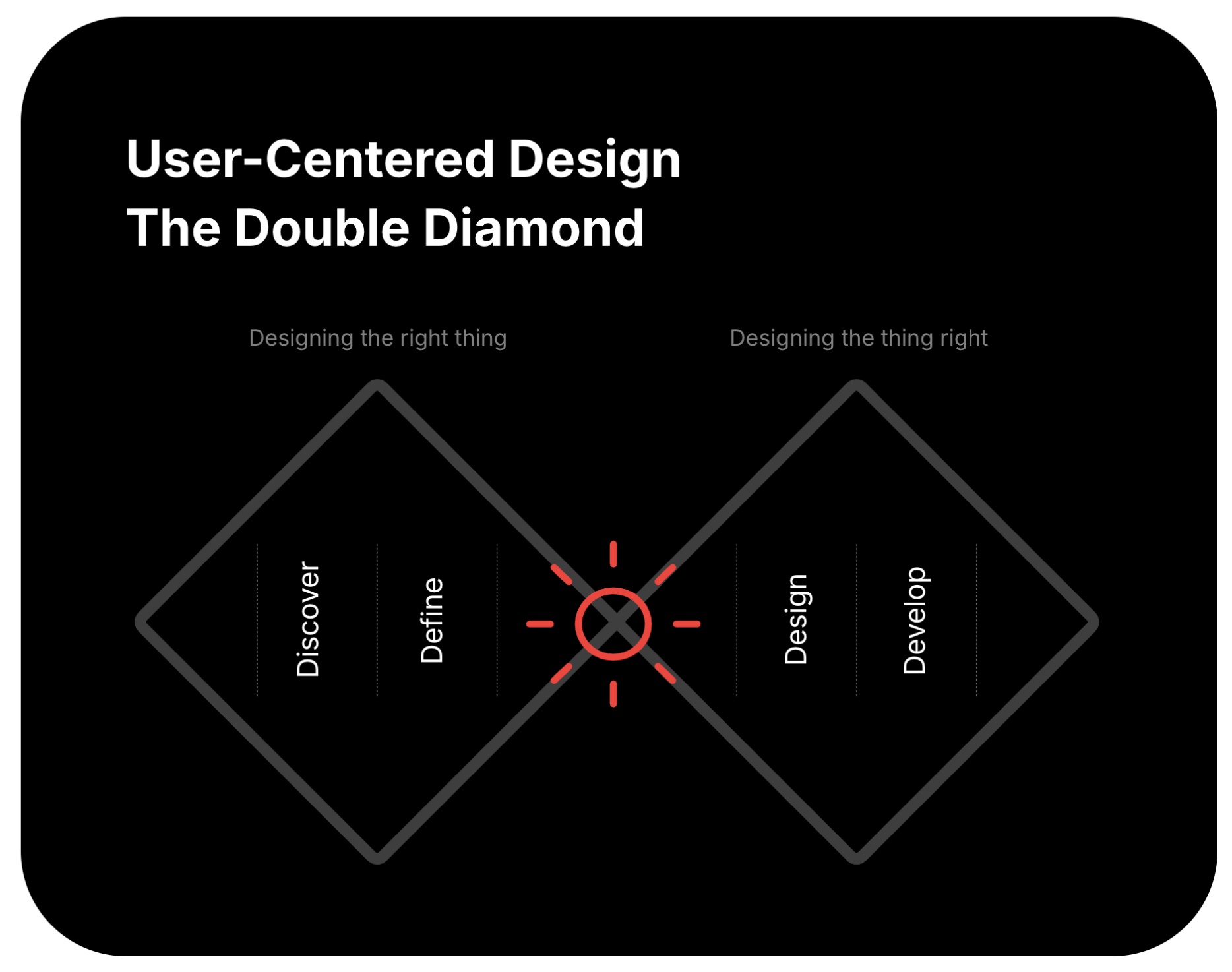
1/ The Double Diamond
Origin: In the 1950s, Professor John E. Arnold, a professor of engineering at MIT and then Stanford, laid the foundations for design thinking. The approach was adopted into IDEO’s work by its founder, David Kelley, who graduated in the 1970s from Stanford, and was later made accessible by Tim Brown, appointed CEO of IDEO. In 2005, the Design Council created the double diamond to clearly communicate the design process to the world.
Goal: Enable an empathic process of designing with not just for people
Questions it answers: What should you design and how should you design it? What problem should you focus on that would address a real user need? How does my target audience engage with my offerings?
When to use: When you need to innovate or validate an innovation, independent of how small or large the scope is.
How to follow: Identify your target audience, and engage them in discovery, ideation, and design phases.
Valuable resource: https://www.ideou.com/blogs/inspiration/what-is-design-thinking
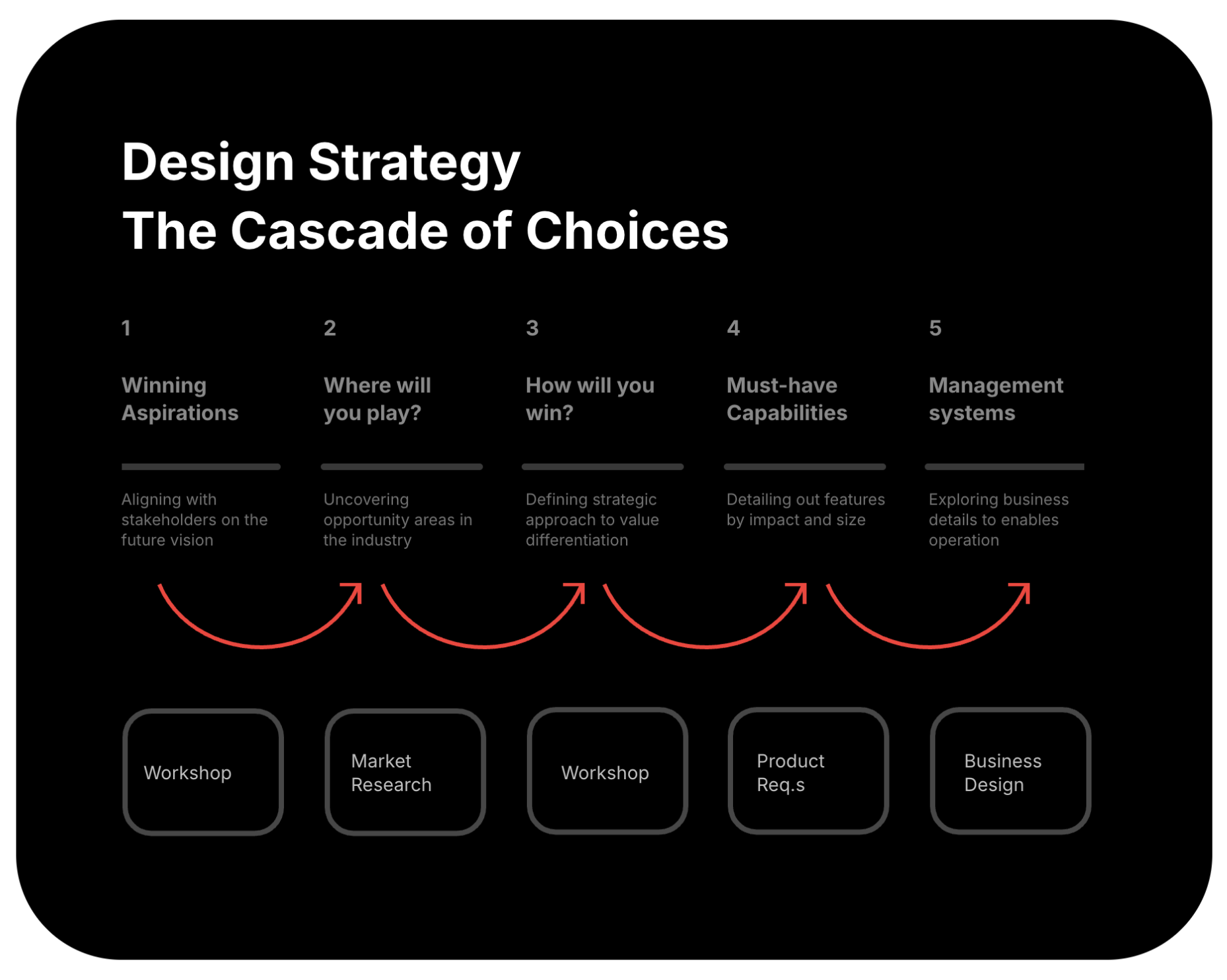
2/ The Cascade of Choices
Origin: The framework was developed by A.G. Lafley, former CEO of Procter & Gamble, and strategist Roger Martin in the early 2000s, and was later formalized in their 2013 book Playing to Win: How Strategy Really Works.
Goal: Provide a systematic approach to enable strategic success.
Questions it answers: As a company, what should be our winning strategy? Where do we focus on work? What is our vision? How do we compete and differentiate? Who do we provide our services to?
When to use: When a company is newly launching, expanding, or reframing its value in the market.
How to follow: Follow the prompts of each step and facilitate a conversation with your client to answer them.
Valuable resource: https://www.interaction-design.org/literature/topics/design-thinking
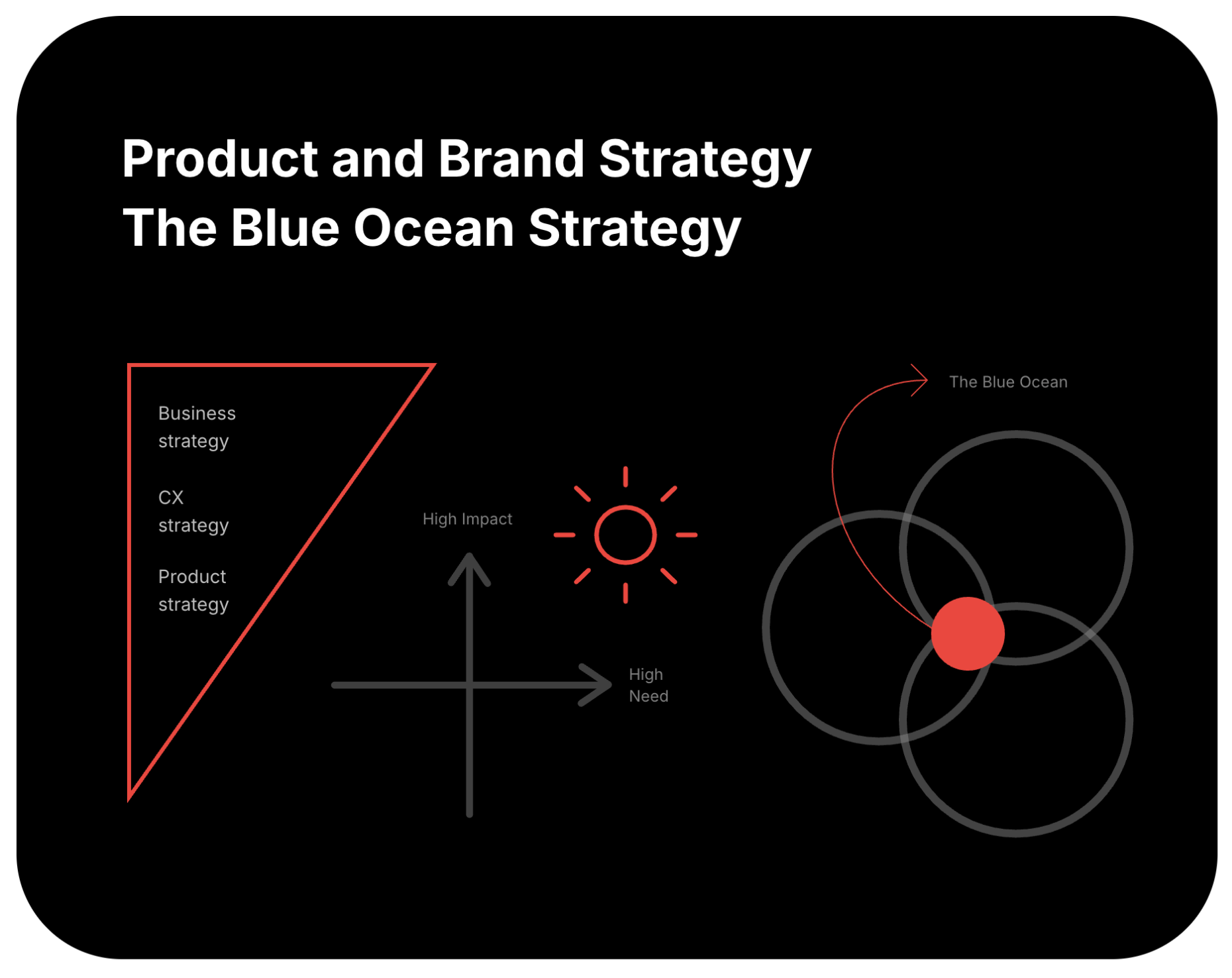
3/ The Blue Ocean Strategy
Origin: It was developed by W. Chan Kim and Renée Mauborgne,
Goal: Provide a framework for products and brands to be differentiated
Questions it answers: As a new company, brand, or product, how do we create new uncontested market spaces (blue ocean), instead of competing in existing crowded industries (red ocean)? Which factors in the industry should be raised, reduced, created, and eliminated?
When to use: When a company, brand, or product is seeking a new space in the market to provide value in and succeed.
How to follow: Engage your client in a series of workshops answering questions about the competitive landscape and market opportunities.
Example: All disruptive companies like Airbnb, Uber, and Meta
Valuable resource: https://www.blueoceanstrategy.com/
There has been a buzz in the design industry about the validity of some of these frameworks, especially the Design Thinking approach to solving problems. However, at their foundational premise and in principle they have been very effective when facilitated by experts, and when adopted at the right time to fulfill a real need, and not just to blindly follow a methodology that is mandated by others.
A designer needs to be able to prescribe to their teams the right framework based on the problem, much like a doctor may prescribe a different medicine based on the diagnosis. Without integrating diagnosis into our process, we risk falling into the corporate trap of doing what we are told to do and diluting the opportunity we have to creative real innovative work.
What is needed is thoughtfulness, conviction, excitement, and experience to move your project form A-Z through the hoops of strategic design.
Additional Resources:
Kim, W. C., & Mauborgne, R. (2005). Blue ocean strategy : how to create uncontested market space and make the competition irrelevant
https://rogermartin.medium.com/on-the-inseparability-of-where-to-play-and-how-to-win-181c2ea5c463
https://rogermartin.medium.com/decoding-the-strategy-choice-cascade-475d40555eb1
